
Flexible DNA transforms protein crystallization
July 29, 2026
 New approach reveals proteins’ structures and enables next-gen flexible biomaterials
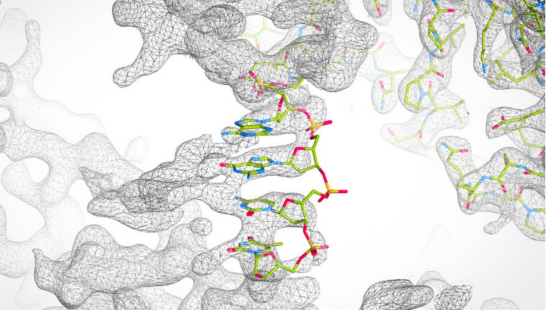
Northwestern Chemistry’s Chad Mirkin led a new study showing how flexible DNA can be used to guide proteins into intentionally designed crystal structures. The approach uses DNA strands as programmable molecular connectors, allowing researchers to control how proteins assemble while maintaining the atomic-level order needed to determine their structures. Published in Science Advances, the work could simplify protein crystallization, a longstanding challenge in structural biology, while opening new possibilities for flexible biomaterials used in biosensing, drug delivery, bioelectronics and robotics.