
Megalibraries in pole position for autonomous discovery over self-driving labs
May 22, 2026
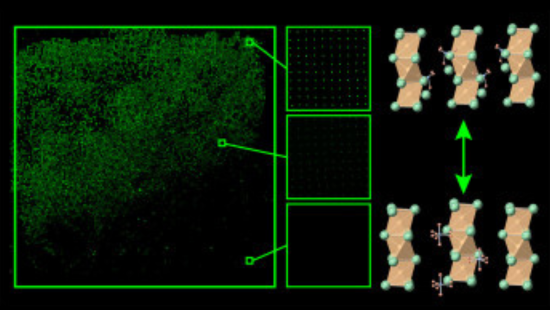
High-speed materials platform could generate massive data to fuel AI-driven discovery
Scientists may soon stop hunting for new materials — and start designing them to order.
For the first time, scientists in the Mirkin Lab have demonstrated that megalibraries — that dramatically accelerate materials discovery — can do more than uncover promising new materials. It can also help scientists intentionally engineer those new materials with specific properties.
In a new study, the team challenged the megalibrary platform to search through thousands of chemical combinations to pinpoint a promising piezoelectric candidate, a material that generates electricity when pressed, bent or squeezed. Then, the researchers used the platform to deliberately design a piezoelectric material that operated at a specific temperature. The platform was not only successful but also incredibly fast, enabling the design of a promising candidate material within hours.
This advance points toward a future where scientists can move beyond the traditionally slow trial-and-error approach to rapidly designing, synthesizing and testing materials with tailored properties. Just as importantly, the platform can generate the vast, high-quality datasets needed to train artificial intelligence (AI) systems to help discover the next generation of materials. The study was published in the journal Science Advances.